If you're a public adjuster, you're going to need social media. And here is the third rule we apply on every PA account we manage, the one that surprises people the most: your business is not photogenic.
The images that drive the public adjuster business are not attractive. Collapsed ceilings. Water stains. Burned rooms. Settlement checks. And here is the trap: when those images ARE attention-grabbing, like a photo of a big check, they get penalized by Facebook and, by extension, Instagram.
So the firms that post the most "proof" are often the firms nobody sees. This article explains why that happens, in plain language, and what to post instead. It is built on more than 10 years of hands-on work with public adjusters across the United States. No fluff.
Why Do Platforms Penalize Damage Photos?
Think about what Facebook and Instagram want: people staying in the app, feeling reasonably good, scrolling a little longer. We covered the economics of that in Social Media Is a Business.
Now think about what a feed full of destroyed homes does to that goal. Disaster imagery, property damage, and negative content make people uncomfortable, and uncomfortable people close the app. So the platforms protect their environment: their systems automatically reduce the distribution of content they classify as promoting disasters or negativity.
Photos of checks have their own problem. To an automated system, a check photo looks like the bait used in get-rich-quick schemes and financial spam. The system cannot tell the difference between a legitimate public adjuster celebrating a fair settlement and a scammer flashing money. So it treats both the same way: less reach.
None of this is a human reviewing your account and judging your profession. It is automated classification at massive scale. Which brings us to the word every PA has heard but few can explain.
What Is a Shadowban, in Simple Terms?
Forget the technical definitions. Here is the simplest way to understand it.
A shadowban means the platform pushes your content, or your whole account, into the shadows. It stops recommending you.
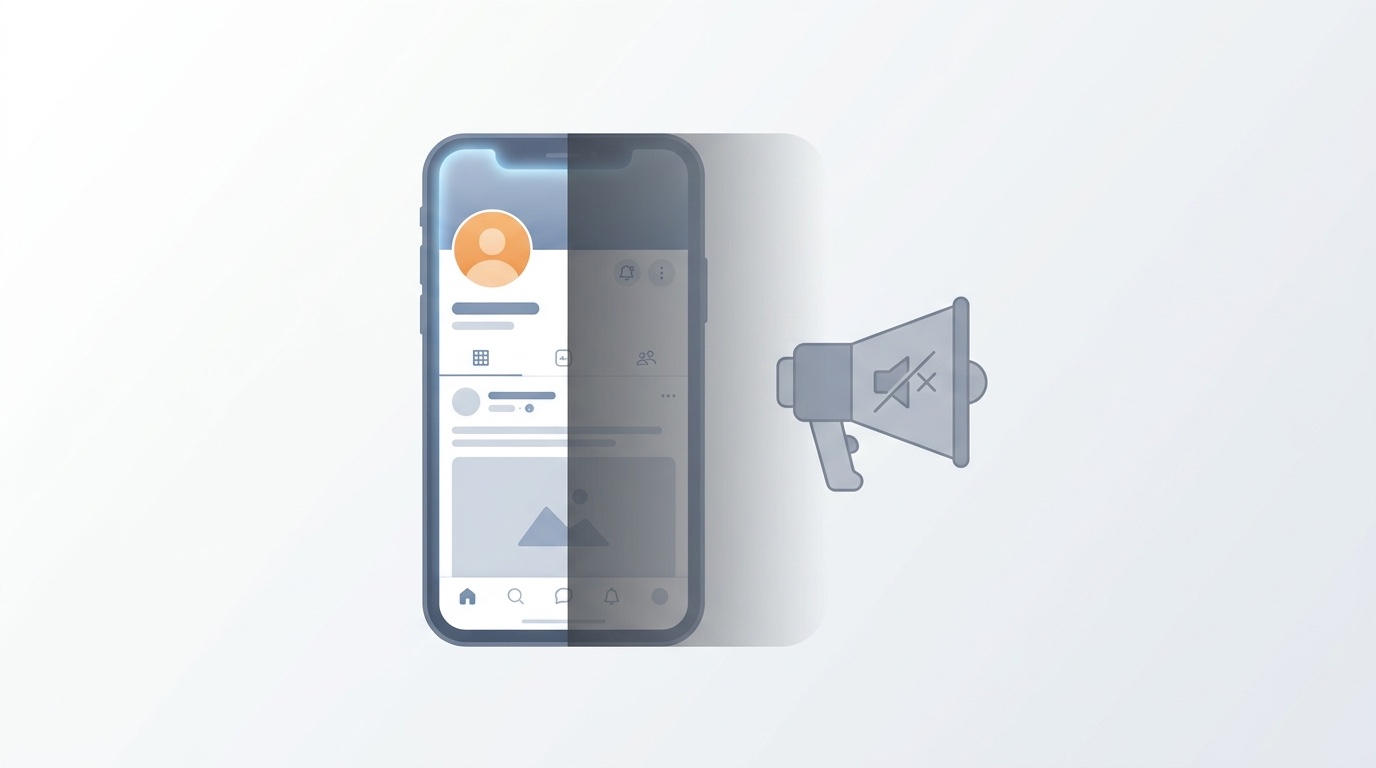
Nothing dramatic happens. You do not get a notification. Your account is not suspended. You can keep posting every day. But your posts stop being shown to people who do not already follow you, and they reach fewer and fewer of the people who do. You become invisible while everything looks normal from your side.
The usual signs:
- Your reach drops and stays down, week after week
- Your posts stop appearing in Explore, hashtags, or recommendations
- New followers slow to a trickle, no matter how often you post
- Engagement comes only from the same small circle of existing followers
If your account leans on damage photos and check photos, this is the most likely reason your numbers feel stuck. The platform is not broken. It is quietly choosing not to show you.
Think you're shadowbanned? Message us
What Should You Post Instead? The Maria Principle
Here is the story that defines our entire approach to PA imagery.
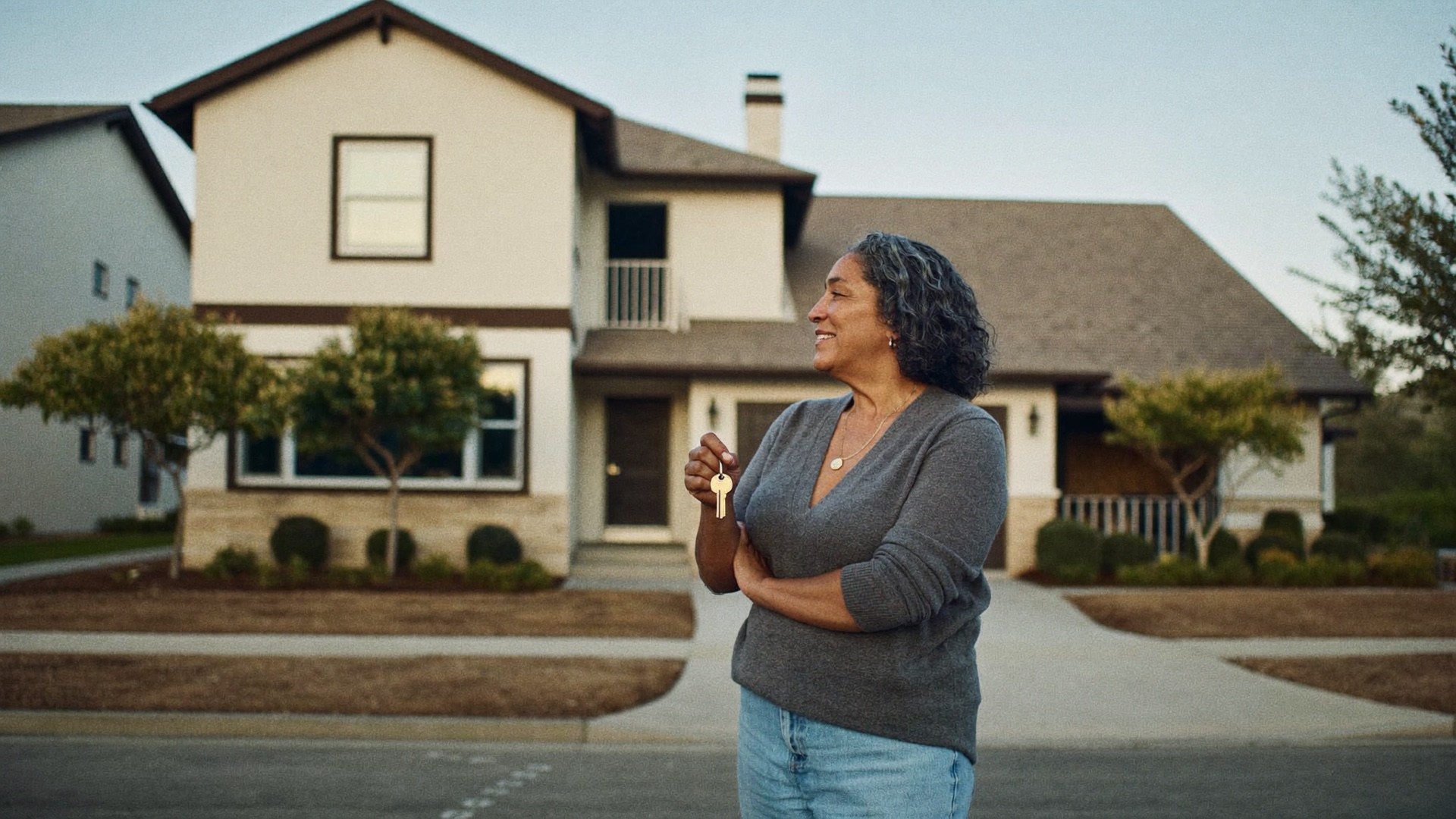
Maria lost her home in a fire. We helped her recover more than she had before. Now, which image sells that story: the photo of her destroyed home, or the photo of Maria?
The answer is Maria. Every time.
Emotions trigger memory processes that tend to get associated with your name. When a homeowner sees Maria smiling in front of her rebuilt house, they do not just see a stranger. They feel something, and that feeling attaches itself to your firm's name. Months later, when their own pipe bursts or their own roof fails, that feeling is what surfaces. A picture of Maria sells more than a picture of her destroyed home.
This is what we call the Maria Principle: sell the recovery, not the destruction.
The damage photo says "look what happened." The recovery photo says "look what is possible." One triggers the platform's penalties and the viewer's discomfort. The other gets distributed freely and builds an emotional memory with your name on it. Same case, same result, completely different marketing outcome.
How Do You Build a Feed Around Recovery Instead of Damage?
You do not need a photographer on staff. You need a different checklist for what you capture and publish.

Lead with people, always. The client in front of the restored home. The handshake at the end of the process. The family back in their kitchen. Faces first, property second. If damage context is truly necessary, it goes later in the carousel, never as the cover image.
Replace check photos with gratitude. Instead of the check, post the client's words. A short quote, a video testimonial, a screenshot of a thank-you message (with permission). The proof is the person, not the paper.
Tell the story in the caption, show the emotion in the image. The caption can say the claim was denied twice before you got it paid. The image should show how the story ends, not how it started.
Document the process, not the catastrophe. You inspecting a roof, measuring, explaining a policy to a homeowner at their kitchen table. Process imagery positions you as the professional advocate, and none of it triggers a penalty.
Get consent and keep it on file. Every client photo and testimonial needs written permission. It protects the client, protects you, and makes the content reusable across web and email.
One more reason this matters beyond Instagram. The story-driven, people-first content you create under this principle is exactly the kind of material that builds your authority on the open web, where AI engines look when a homeowner asks for a public adjuster recommendation. You can see in 60 seconds how visible your firm currently is to those engines with a free scanAEO audit. And if you are also rethinking who that content should reach, start with Don't Follow Everyone.
Rebuild your feed — talk to us
What If You Have Already Been Posting Damage Photos for Years?
Do not delete your account and start over. Do this instead:
- Stop the bleeding. From today, no new damage-led posts and no check photos.
- Audit your last 30 posts. Count how many lead with destruction or money. That number is your penalty exposure.
- Rebuild the pattern. Publish consistently under the Maria Principle for the next 60 to 90 days. Recommendation systems respond to recent behavior; a sustained change in what you post changes how you are classified.
- Watch reach, not likes. The recovery signal you are looking for is non-follower reach climbing again: your posts showing up in Explore and recommendations.
- Collect recovery stories from past clients. Your closed cases are a library of Maria stories waiting to be told. One message to a happy past client can produce your next month of content.
Your business is not photogenic. Your clients' recoveries are. Point the camera at them.
Want us to look at your feed and tell you straight if damage photos are costing you reach? One message is enough.
FAQ
What is a shadowban on Instagram or Facebook?
A shadowban is when the platform quietly stops recommending your content or your account. Your posts stay visible to you, but the platform shows them to far fewer people, especially non-followers. There is no notification; the main symptom is reach that drops and stays low.
Why do damage photos hurt a public adjuster's reach?
Platforms automatically reduce the distribution of content classified as promoting disasters or negativity, because it makes users uncomfortable and shortens their time in the app. Photos of destroyed property routinely fall into that classification, so accounts that rely on them lose reach.
Why are photos of settlement checks penalized?
To automated moderation systems, check and money imagery resembles the bait used in financial scams and get-rich-quick spam. The systems cannot distinguish a legitimate settlement from a scheme, so they limit the reach of both.
What should public adjusters post instead of damage photos?
Recovery-focused, people-first content: clients in front of restored homes, testimonials, the adjuster working through the process with homeowners. Emotional recovery imagery builds positive memory associated with your firm and is distributed freely by the platforms.