If you're a public adjuster, you're going to need social media. Here is the part almost nobody explains to you: social media is a business. A very profitable one. The question you should be asking is whose business your account is feeding right now.
Because here is how it actually works. If your followers are correctly selected, meaning they are your buyer persona, the homeowners and business owners with the problems you solve, then inside the platforms they are a business for someone else. They only start becoming a business for you when you pull them out of there.
This is one of the three rules we apply on every public adjuster account we manage, built on more than 10 years of hands-on work with PA firms across the United States. No fluff. Let's break down the economics.
How Does Instagram Make Money From Your Followers?
Instagram and Facebook do not charge you to post. They do not charge your followers to scroll. So where does the money come from?
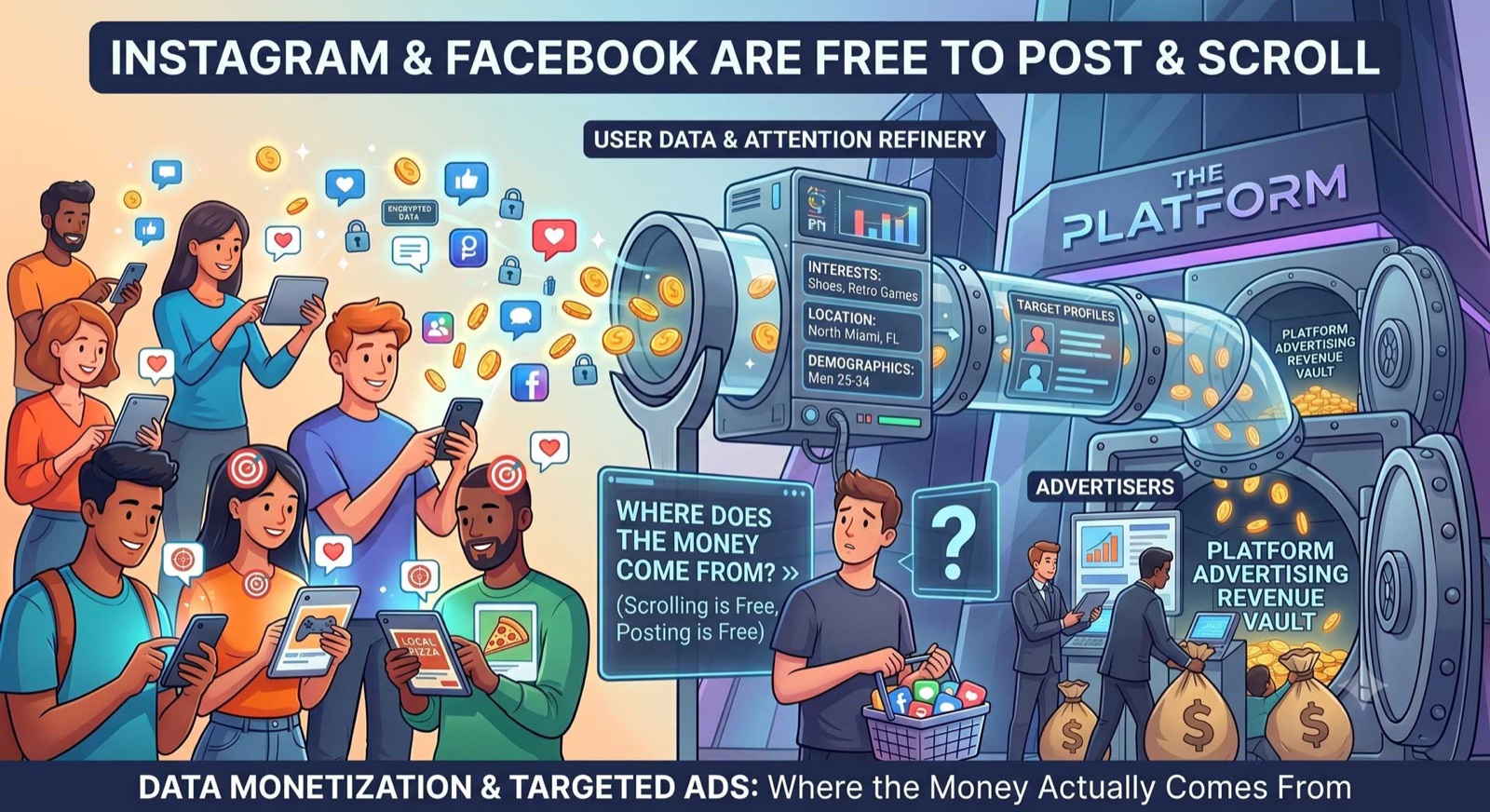
It comes from attention. Every follower you bring to the platform spends time there. During that time, they see ads, they generate behavioral data, and they feed the recommendation engine that keeps other users scrolling. The platform sells that attention to advertisers, every single day, at scale.
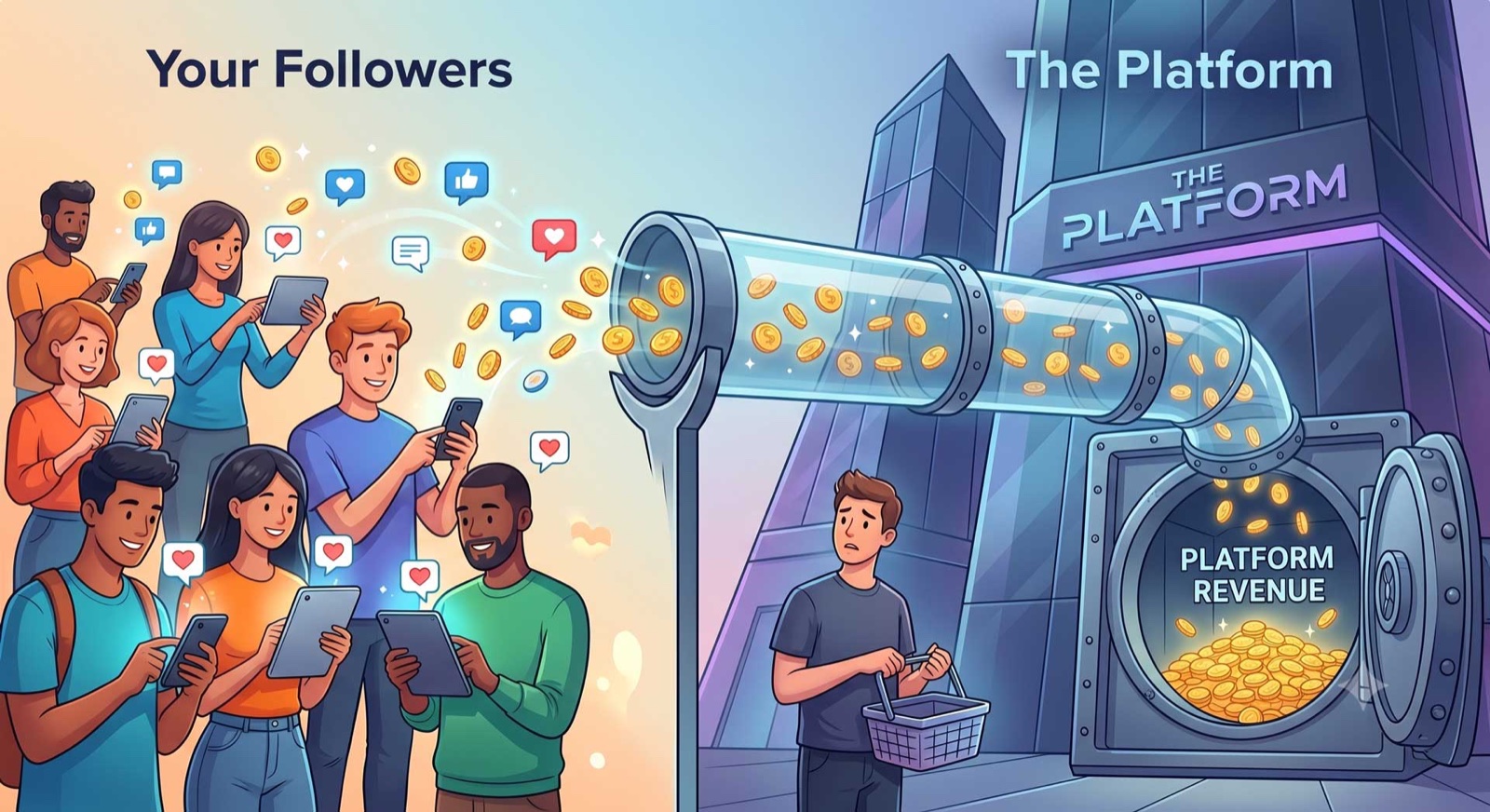
Now follow the chain. You create the content. Your content attracts and retains the followers. The followers' attention gets monetized. And the revenue goes to the platform.
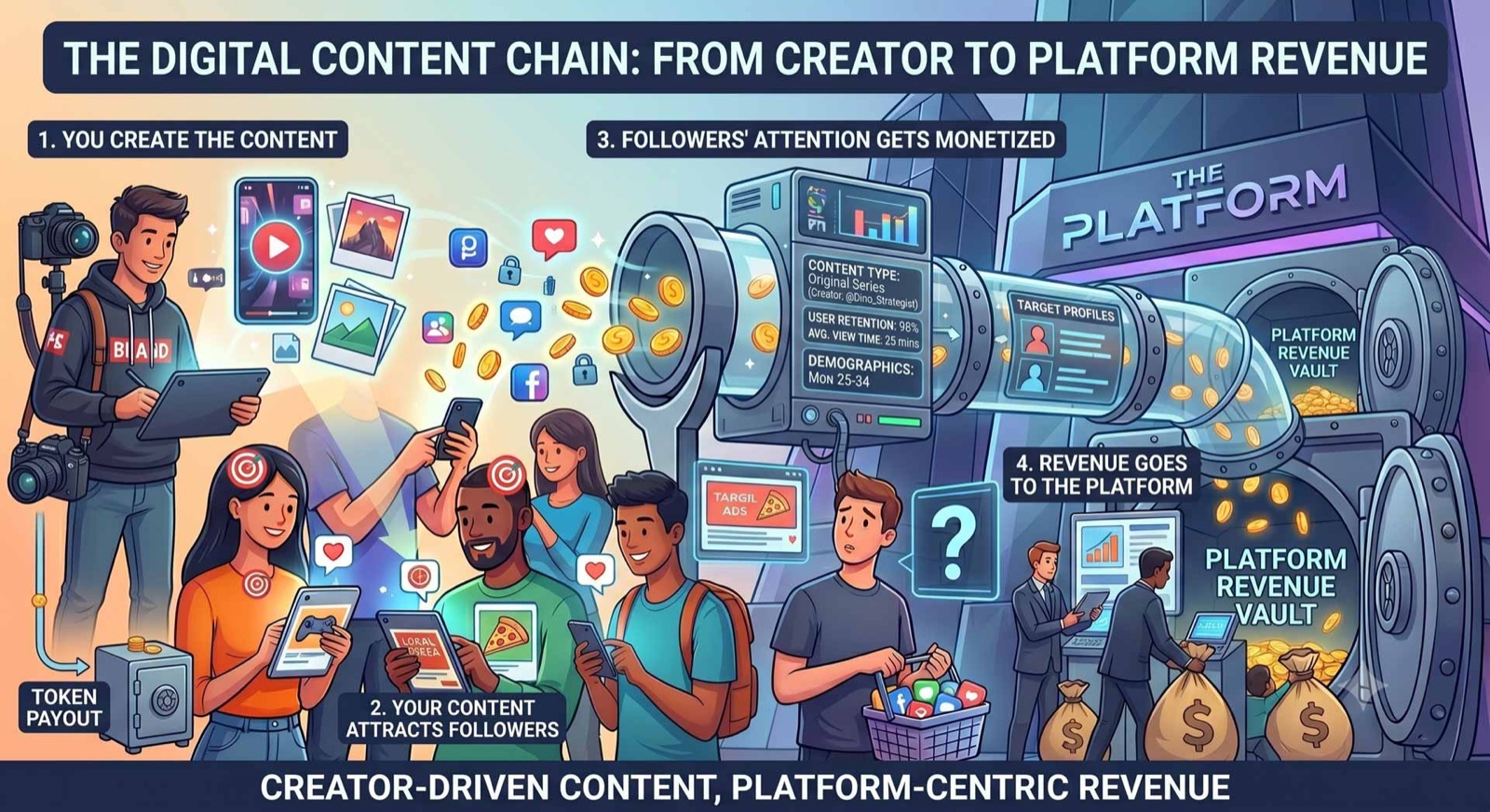
You are, in the most literal sense, an unpaid content supplier for one of the most profitable businesses on earth. That is not a complaint. It is the deal. The platforms give you free distribution and in exchange they keep the audience. The mistake is not using social media. The mistake is stopping there and thinking the deal is complete.
When Do Your Followers Become YOUR Business?
There is exactly one moment when a follower stops being the platform's asset and starts being yours: when the relationship moves to a channel you own.
Three doors make that happen for a public adjuster:
A landing page. The follower leaves their name and contact information on your website in exchange for something useful. A claim documentation checklist. A storm-readiness guide. From that moment, you decide when they hear from you. Not the algorithm.
A WhatsApp contact. For this industry, the strongest door there is. A follower who sends you one message has started a real conversation. No feed, no competition, no algorithm deciding whether your next post reaches them.
A phone call. The oldest conversion event in the world, and still the most honest one. A call is a lead. Everything before the call is marketing.
The principle behind all three: your followers should feed your client base, not Facebook's or Instagram's algorithm. Your real asset as a public adjuster is your client base, not your follower count.
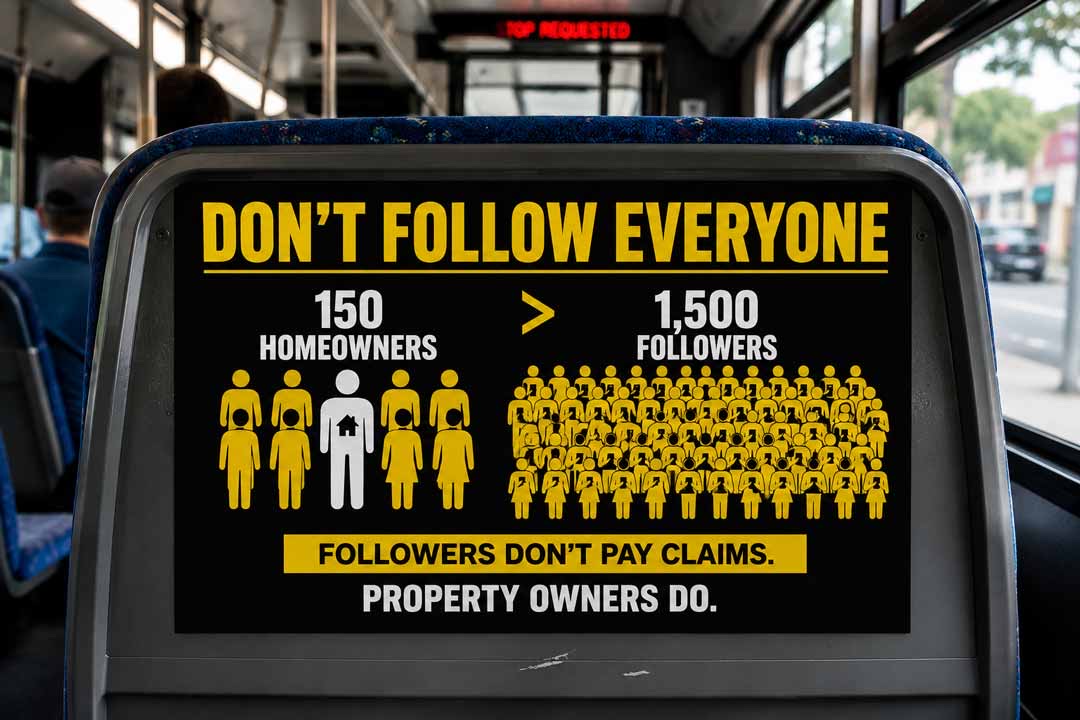
And there is a number that makes this concrete. It is more valuable to be followed by 150 homeowners than by 1,500 enthusiasts who don't hold a property title. The 150 can become claims, referrals, and reviews. The 1,500 are a vanity metric that makes the platform money and makes you feel productive. If you want to go deeper on who should be in your audience in the first place, we covered that in Don't Follow Everyone.
Why Does a Client Base Beat a Follower Count?
Think about what each asset can actually do for your firm.
A follower count can impress a prospect who visits your profile. That has some value. But it cannot be exported, it cannot be emailed, it cannot be called, and it can be taken away. If the platform changes its rules, suspends your account, or simply stops showing your content, your follower count is worth exactly zero that day. You are renting that audience, and the landlord can change the terms whenever it wants.
A client base is different. It is a list you own: names, phone numbers, emails, claim histories, past conversations. It survives any algorithm change. It can be reactivated with a single well-written message during storm season. It compounds: every closed case adds a person who knows your name, trusts your work, and refers their neighbors.
This is also why your database, even a forgotten Excel file with past claimants and unsigned quotes, is one of the most undervalued assets in your office. The followers you convert today join that asset. The followers you never convert stay on the platform's balance sheet, not yours.
How Do You Start Pulling Followers Out, Starting This Week?
You do not need a funnel-building course. You need one door and the discipline to point at it.
- Choose your one door. For most PA firms we recommend WhatsApp, because the barrier is one message and the intent is real. Put it in your bio. Mention it at the end of your content.
- Give a reason to walk through it. "Contact us for more information" converts nobody. "Send us the word CLAIM and we'll send you the 5 documents you need before calling your insurer" converts, because it is specific and useful.
- One call to action per post. A post that ends with "DM us, check the link in bio, call us, and visit the site" offers four doors and the viewer walks through none. One argument, one door.
- Count conversations, not likes. At the end of each week, the question is not how many likes you got. It is how many real conversations your content started. Ten conversations from 200 followers beat zero conversations from 2,000.
- Store every contact you capture. Each one goes into your list, your CRM, your client base. That is the asset growing.
One more layer worth knowing. The same ownership logic now applies to how AI engines see your firm. When a homeowner asks ChatGPT or Gemini to recommend a public adjuster, those engines pull from firms with a clear, structured, owned presence on the open web, not from follower counts. You can check how visible your firm is to AI engines in 60 seconds with a free scanAEO audit. Same principle, different battlefield: own your presence instead of renting it.
So Should You Stop Posting?
No. Post more, in fact. Social media is the top of this whole system, and for a public adjuster it is the most affordable distribution channel that exists. The point of this article is not to abandon the platforms. It is to stop confusing the platform's scoreboard with yours.
The platform's scoreboard is followers, likes, and time spent in the app. Your scoreboard is conversations started, contacts captured, and cases signed. Post consistently, select your audience deliberately, and treat every piece of content as a bridge toward a channel you own.
Social media is a business. Run yours on it.
Want us to look at your account and tell you straight whether it is building your business or the platform's? One message is enough. WhatsApp: (305) 606-0395.
FAQ
How do social media platforms make money from my followers?
Platforms monetize your followers' attention. While your audience scrolls and engages with your content inside the app, they see ads and generate data the platform sells to advertisers. You supply the content; the platform keeps the revenue from the audience it retains.
When does a follower become an asset for my firm?
When the relationship moves to a channel you own: a contact list captured through a landing page, a WhatsApp conversation, or a phone call. Until then, the follower generates value inside the platform, for the platform.
Why is a client base more valuable than a follower count for a public adjuster?
A client base is portable, contactable, and reactivatable, and it survives any algorithm change or account suspension. A follower count is rented visibility that the platform controls and can reduce at any time.
What is the first step to convert followers into contacts?
Choose one off-platform door, ideally WhatsApp for public adjusters, and end every piece of content with one specific, useful reason to use it. Then measure conversations started per week instead of likes.